Human Capacity Programme
Building Sustainable Leaders for the Future of Work and human capacity to thrive in an ai powered world
Every boardroom conversation right now is about AI adoption. Faster, more productive and increasing output. But there's a quieter problem underneath it: the people expected to deliver that transformation are running out of capacity to do it.
AI hasn't reduced the load for most , it's added more decisions, more tools, more things to check before they go out the door. Every AI output still needs a human to judge whether it's actually good and then what to do with it.
Right now, leaders are carrying an enormous emotional load. They're navigating uncertainty themselves while trying to create certainty for everyone else. They're managing restructures, AI transformation, tighter budgets and exhausted teams.
Whether we realise it or not, our emotional state walks into the room before we do. If we're reactive, our teams become reactive. If we're overwhelmed, our teams feel it. But the opposite is true as well. When leaders remain grounded, people think more clearly, they collaborate more effectively and they feel safer to contribute.
As AI continues to accelerate, I don't think our biggest challenge will be keeping up with technology. I think it will be protecting the time and mental space needed to think well. Because good leadership has never been measured by how quickly you respond. It's measured by the quality of the decisions you make.
The future of work isn't just about AI readiness. It's about human readiness. As technology accelerates, our ability to slow down, remain grounded and think well becomes more valuable. We need to protect the human capabilities that technology can’t replace and ensure our people can keep up with the pace of change without losing themselves within it.
While every organisation is racing to become AI-ready, few are asking the harder question: do your people have the capacity to keep up?
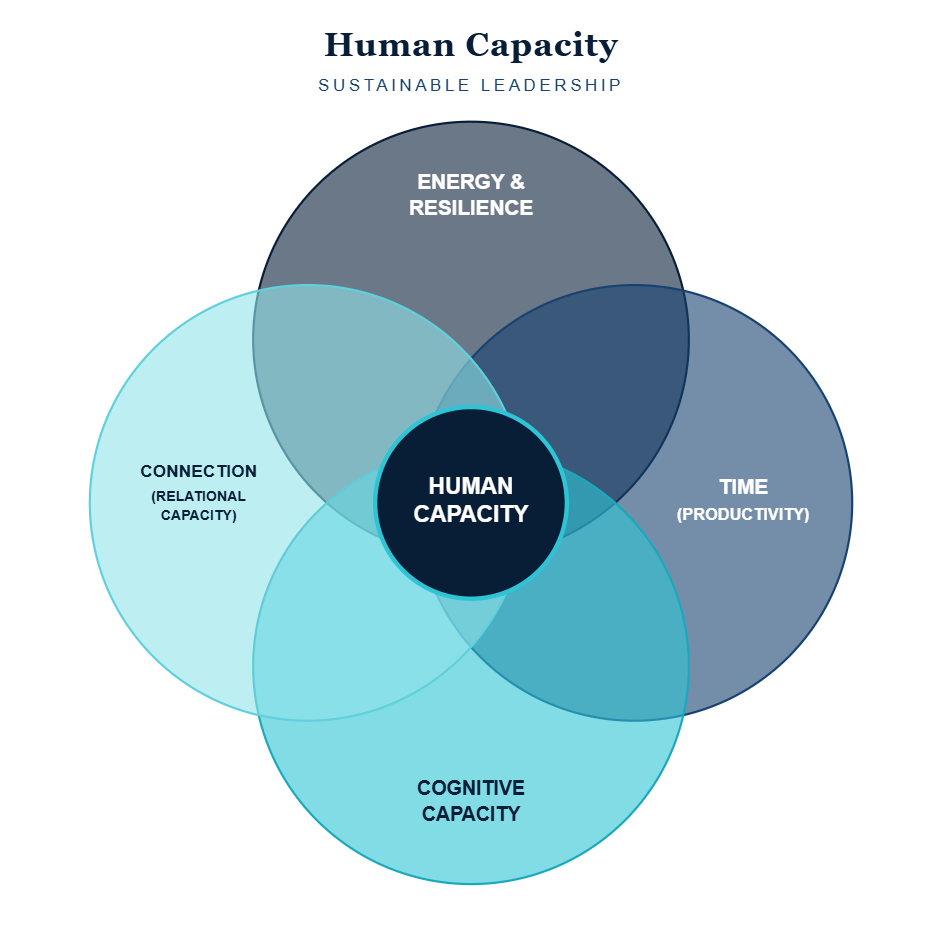
We're seeing it everywhere: decision fatigue, mental clutter, constant context switching, brain fry, disengagement, burnout. Teams are feeling increasingly disconnected despite having more ways to communicate than ever before.
These aren't isolated wellbeing issues. They're becoming business risks. The challenge isn’t just keeping up with technology, but keeping our minds clear enough to use it well.
Because organisations don't succeed through technology alone. They succeed through people who can think critically under pressure, adapt when priorities shift overnight, lead confidently through uncertainty, collaborate across increasingly complex environments, regulate stress while maintaining performance, and build trust during change.
The organisations that thrive over the next decade won't necessarily be the ones with the most advanced technology. They'll be the ones with people who have the greatest capacity to use it well.
Technology and information are accelerating, it’s our human capacity that becomes the business constraint. The bottleneck isn't technology or information anymore, it's attention. We need to ensure we’re not just making our organisations AI-ready, but at the same time making our people future-ready. Because whilst technology can process information, it’s the humans that still have to make the decisions on what to do with it.
Whilst we’re all obsessing about if our organisation is AI-ready. I think we should be asking a different question. Are our leaders future ready humans?
current challenges
Decision fatigue in high-pressure environments - Overwhelmed by constant, fast-moving decisions and lack the clarity to discern what truly matters.
Leading through uncertainty without a clear playbook - AI, economic shifts, and workforce expectations are evolving faster than leadership capability frameworks.
Struggling to maintain trust during change and transformation - Change is constant, but leaders sometimes lack the human skills to bring people with them.
Emotional reactivity under pressure - Stress is driving short-term, fear-based decisions that impact culture and long-term outcomes.
Loss of human connection in increasingly digital workplaces - As AI and remote work rise, genuine connection and engagement become more challenging.
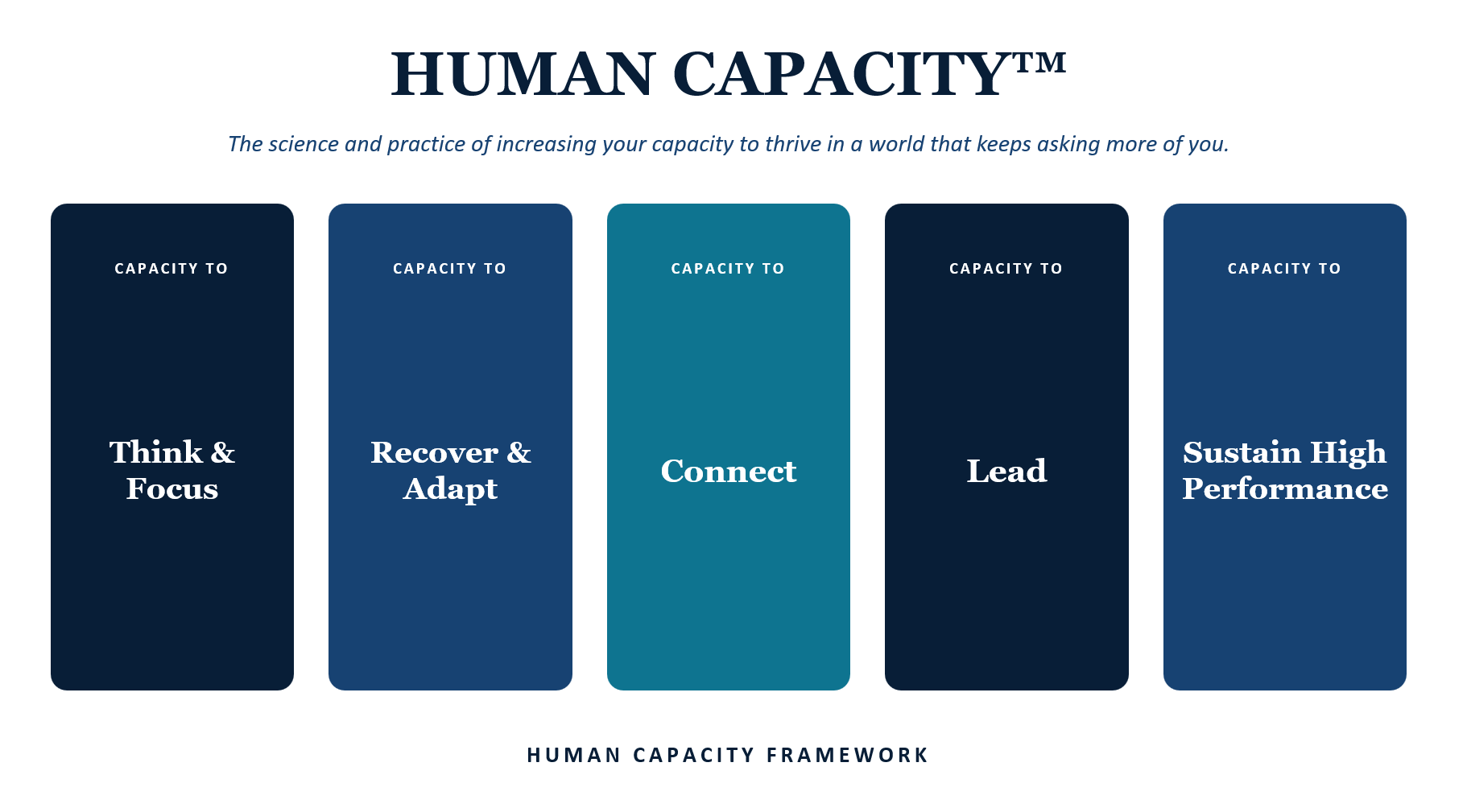
Future ready humans lead from the centre
We have entered an era where intelligence is no longer rare. Machines can analyse, predict, optimise. They can generate strategy in seconds. So the question for leaders is no longer, “How do we work faster?” It is “What makes us irreplaceable?”
It’s not how fast you think or how much you know. But how well you remain yourself when pressure rises. It’s the capacity to remain steady when uncertainty rises. The discernment to pause before reacting. The ability to read a room that no algorithm can interpret. To lead change without losing trust. To hold performance and humanity in the same hand.
This means leading from a place of calm, clarity and grounded confidence, not from stress, reactivity, or ego. It’s about accessing your inner compass, staying anchored to what matters most, and showing up with presence no matter what’s happening around you. Building the capacity to deliver amid the noise and the space to innovate and think strategically.
The future of work isn't just about AI, it's about human capacity, which has now become a strategic business risk. The leaders who will shape the next decade are not those who outpace disruption. They are those who remain grounded within it.
We need to develop the one intelligence that can not be outsourced. The future isn’t asking us to compete with machines. It’s asking us to remember what they can never be.
Available as an in house programme for leaders and their teams. Get in touch to chat further and for availability.